
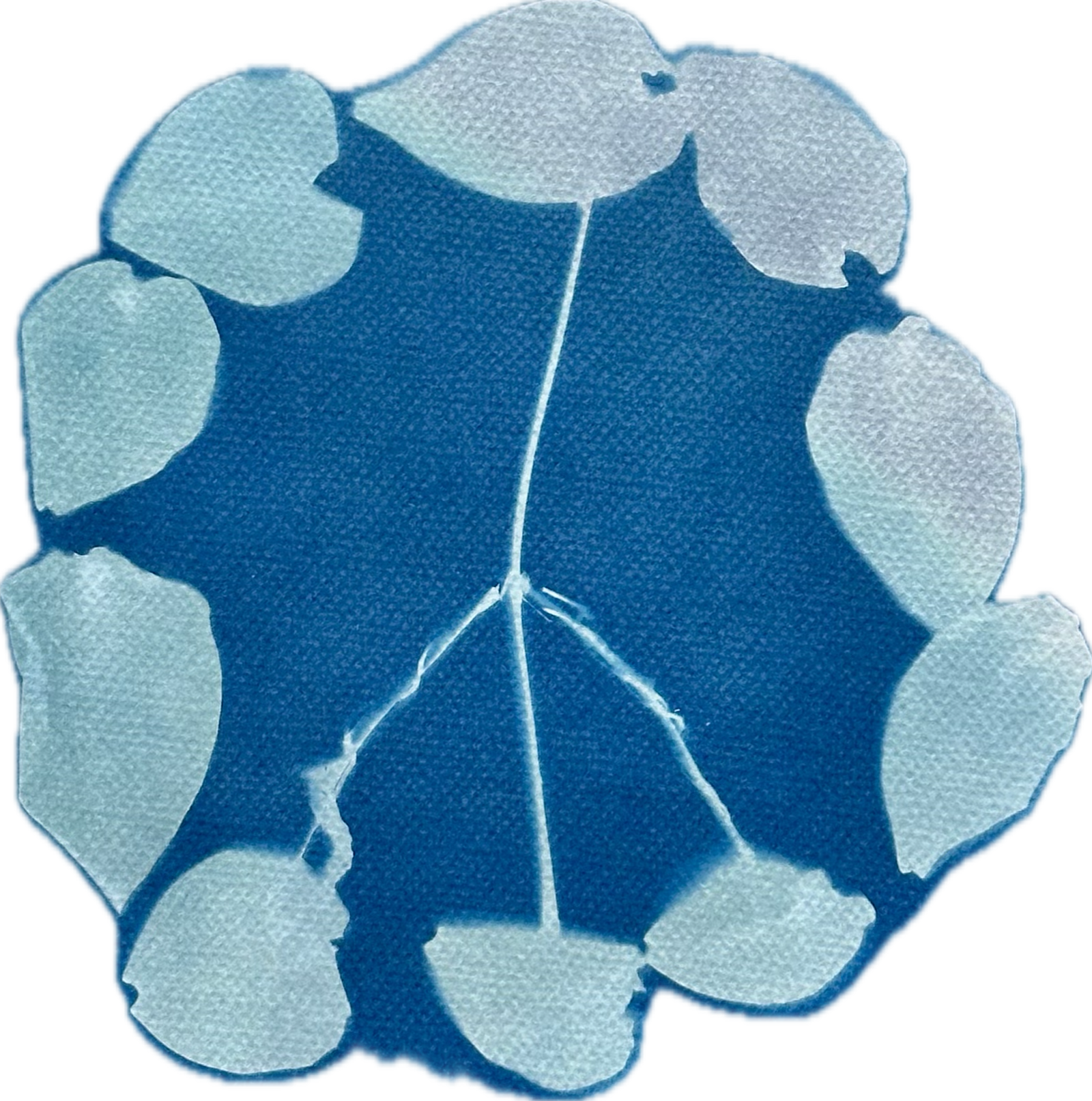
What is Cyanotype?
Cyanotype is one of the earliest photographic printing processes. It uses sunlight, water, and a light-sensitive solution to create blue and white images by hand.
To make a cyanotype, I coat paper with the solution, arrange flowers, leaves, heirlooms, tools, or other objects on top, and place it in the sun. Wherever the sunlight reaches, the paper turns a deep blue. Wherever an object blocks the light, it leaves a lighter impression behind.
Each print is one of a kind. The final image is shaped by the objects I use, the weather, the strength of the sun, and the length of exposure. Even the smallest details, like the veins of a leaf or the transparency of a petal, can change how the print develops.
For me, cyanotype is a way to preserve pieces of life and nature together. A wildflower from a walk, a family keepsake, a handwritten note, or a tool from a former trade can become part of the artwork.
The result is a handmade print created through a simple but beautiful collaboration between sunlight, water, nature, and memory.
—
Using sunlight to preserve botanicals, heirlooms, and moments in time.
—
A photographic process powered by sunlight.
Unlike a digital image, a cyanotype requires presence.
The materials must be gathered, arranged, exposed, and developed by hand. The process asks for patience and attention, creating a record not only of the object itself, but of the time spent noticing it.